
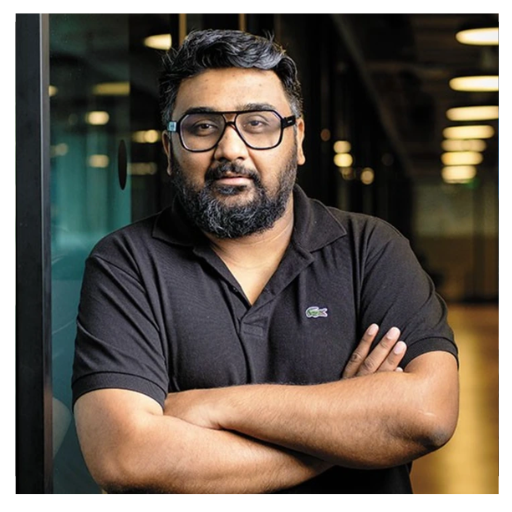
Kunal Shah story is not the typical story of an entrepreneur who built one company and stayed there.
He has built, sold, invested in, and advised technology businesses across different stages of India’s startup journey. His first major success came with FreeCharge, but it was his second major venture, CRED, that established him as one of India’s most closely watched fintech entrepreneurs.
In 2026, his career entered another remarkable phase. Meta announced a major investment in CRED and appointed Shah to lead WhatsApp globally. At the same time, he stepped away from CRED’s day-to-day operating role while continuing to hold his personal stake in the company.
That makes Kunal Shah’s journey particularly interesting—not simply because of the companies he has built, but because of the way he has repeatedly moved into new problems, new markets, and new stages of technology.
Who Is Kunal Shah?
Kunal Shah is an Indian entrepreneur, investor, and technology business leader best known as the founder of CRED and co-founder of FreeCharge.
He started his entrepreneurial career by building consumer internet businesses and later became an active angel investor in India’s startup ecosystem.
In June 2026, Meta appointed him to lead WhatsApp globally after agreeing to invest approximately $900 million in CRED. Shah stepped away from his executive responsibilities at CRED but retained his personal shareholding.
His career now connects three major chapters:
FreeCharge → CRED → WhatsApp
Each chapter represents a different stage of his thinking about consumers, payments, trust, and technology.
Kunal Shah’s Early Life and Education
Kunal Shah studied philosophy at Wilson College in Mumbai.
He later enrolled in an MBA program at Narsee Monjee Institute of Management Studies but did not complete the course.
His educational path was different from the conventional route followed by many technology founders.
Rather than building his career around a formal management degree, Shah developed his reputation through entrepreneurship, consumer behavior, technology products, and investing. His philosophical background has also become part of his public identity, particularly through the short observations and ideas he regularly shares about people, incentives, and businesses.
The First Step: PaisaBack
Before FreeCharge, Shah worked on PaisaBack, a cashback and promotional platform designed for retailers.
The idea did not become his defining business, but it gave him an early opportunity to understand consumers, promotions, and digital commerce.
Eventually, he moved on to a much bigger opportunity.
That opportunity became FreeCharge.
How Kunal Shah Built FreeCharge
In 2010, Kunal Shah co-founded FreeCharge with Sandeep Tandon.
The company’s basic proposition was easy for consumers to understand: make mobile recharges and bill payments more attractive by offering discounts and promotional benefits.
At a time when India’s digital consumer market was still developing, FreeCharge managed to build significant user attention.
The business benefited from a simple combination:
Digital payments
Mobile recharges
Consumer incentives
Cashback and discounts
Easy online transactions
It was a model that helped introduce many Indian consumers to digital payment behavior.
FreeCharge’s Acquisition
FreeCharge eventually became one of India’s best-known consumer internet startups.
In 2015, Snapdeal acquired FreeCharge in a deal widely reported at around $400–450 million. The acquisition became one of the notable startup exits of India’s early digital-commerce era.
For Shah, the exit created something even more valuable than financial success: time.
He left FreeCharge and spent the following period investing, studying businesses, and observing how India’s technology ecosystem was developing.
That experience eventually influenced his next company.
What Did Kunal Shah Do After FreeCharge?
After leaving FreeCharge, Shah became increasingly active as an angel investor.
He invested in and supported several Indian startups, giving him exposure to different business models rather than being tied to a single company.
His investment portfolio has included companies such as Razorpay, Unacademy, and Spinny, according to profiles and reporting about his investment activity.
This period appears to have influenced the way he thought about the next problem he wanted to solve.
And that problem was related to trust.
The Idea Behind CRED
Kunal Shah founded CRED in 2018.
The central idea was relatively simple:
Why shouldn’t people who are financially responsible be rewarded for that behavior?
CRED initially focused on consumers who paid their credit card bills on time.
Instead of treating credit card payment as a boring financial task, the platform turned it into a membership experience involving rewards, offers, and a premium brand identity.
The concept was different from conventional payment apps.
CRED was not initially trying to reach everyone.
It focused on a narrower group of consumers with stronger credit profiles.
Why CRED Stood Out
The Indian fintech market was already crowded when CRED launched.
There were payment apps, banks, wallets, and financial technology platforms competing for consumers.
CRED took a different route.
Its brand was designed around:
Trust
Creditworthiness
Premium membership
Rewards
Financial behavior
Consumer experience
Instead of asking, “How do we get every user?” the company focused on a specific customer group and tried to build a strong relationship with them.
That positioning became one of CRED’s most recognizable characteristics.
CRED Grew Beyond Credit-Card Payments
Over time, CRED expanded beyond its original credit-card bill payment proposition.
Its platform moved into areas including:
Payments
Lending
Insurance
Wealth
Credit-related products
Lifestyle services
By 2026, CRED said that 17 million members were engaging with the platform every month. The company also said it processed more than 40% of India’s credit-card bill payments and had reached approximately ₹24,000 crore in managed lending assets for partner financial institutions.
This was an important shift.
CRED was no longer simply a rewards application.
It was becoming a broader financial platform.
The 2026 CRED–Meta Deal
June 2026 became one of the biggest turning points in Kunal Shah’s career.
CRED announced that it would raise ₹8,550 crore, approximately $900 million, in a Series H round led by Meta.
The transaction valued CRED at approximately ₹43,239 crore, or $4.5 billion, post-money. Meta became a minority investor, while CRED said Meta would not receive access to its customer information.
The deal was significant for two reasons.
First, it gave CRED a substantial new capital base.
Second, it changed Shah’s own career direction.
Kunal Shah Becomes Global Head of WhatsApp
As part of the 2026 transition, Kunal Shah joined Meta’s global leadership team and became the new leader of WhatsApp.
He succeeded Will Cathcart in the role.
Shah stepped away from his operating position as CEO of CRED but retained his personal shareholding in the fintech company. CRED appointed Miten Sampat as interim CEO.
This is a remarkable transition.
An entrepreneur who built a startup around digital payments and consumer trust was now being given responsibility for one of the world’s largest messaging platforms.
Why Meta Chose Kunal Shah
Kunal Shah’s background makes the appointment understandable from a business perspective.
He has experience building consumer products where:
Trust matters
Transactions happen frequently
Users need simple interfaces
Financial behavior matters
Networks can become powerful
Businesses need to scale rapidly
These are also important considerations for WhatsApp as it expands beyond messaging into areas such as payments, commerce and business services.
Meta CEO Mark Zuckerberg described Shah as someone with a builder mindset and global perspective.
What Does Kunal Shah’s WhatsApp Role Mean?
WhatsApp is no longer just a messaging application.
Its business ecosystem includes:
Messaging
Business communication
Payments
Commerce
AI features
Customer interaction
India is particularly important to WhatsApp because of its enormous user base and growing digital economy.
For Shah, the role therefore represents an opportunity to work on a platform operating at a scale far beyond any startup he previously built.
Kunal Shah’s Business Philosophy
One of the most interesting parts of Shah’s career is the way he thinks about human behavior.
His public commentary frequently focuses on incentives, trust, consumer psychology, and the way people make decisions.
This thinking can be seen in both FreeCharge and CRED.
FreeCharge used rewards and discounts to encourage digital transactions.
CRED used rewards and status to encourage responsible credit card payments.
The products were different, but the underlying question was similar:
How can technology change user behavior by making the right action more rewarding?
That is one of the strongest themes running through Shah’s entrepreneurial journey.
Kunal Shah as an Investor
Shah’s influence extends beyond the companies he founded.
After FreeCharge, he became an active angel investor and has invested in a large number of startups.
Fortune India notes that he has invested in more than 200 companies and has been recognized on its 40 Under 40 list.
His investment activity has given him exposure to areas including:
Fintech
Consumer technology
Education technology
Mobility
E-commerce
SaaS
Internet businesses
This has also allowed him to observe how different founders approach growth and product development.
Kunal Shah’s Wealth
Kunal Shah is widely described as a wealthy entrepreneur, but there is no single publicly verified figure that should be treated as his exact current personal net worth.
His wealth is connected to several factors, including:
His retained CRED shareholding
Proceeds from the FreeCharge exit
Startup investments
Angel investments
Other business interests
The 2026 CRED transaction gives investors a clearer reference point for the value of the company, but company valuation is not the same thing as the founder’s personal wealth.
CRED’s $4.5 billion post-money valuation does not mean Shah personally owns $4.5 billion.
His actual wealth depends on his percentage ownership, other assets, liabilities and investments. CRED confirmed that he retained his personal shareholding after moving to Meta.
How Kunal Shah Created Long-Term Wealth
His wealth creation story can be understood through three major stages.
Stage 1: Building FreeCharge
FreeCharge gave Shah his first major entrepreneurial exit.
Stage 2: Investing
After the exit, Shah invested in and learned from other startups.
Stage 3: Building CRED
CRED created another large technology business and gave him substantial equity value.
This is a useful example of how startup wealth can come from ownership and long-term company building, rather than simply from annual salary.
Kunal Shah’s Biggest Business Lessons
Build for a Specific Customer
CRED did not initially try to serve everyone. It focused on creditworthy users.
Understand Incentives
Both FreeCharge and CRED used incentives to influence customer behaviour.
Brand Can Be a Competitive Advantage
CRED showed that financial products do not always have to look like traditional financial services.
Learn From Other Founders
Shah’s investment career exposed him to hundreds of startups and business models.
Do Not Be Afraid to Start Again
After FreeCharge, he built CRED. After building CRED, he moved into a global leadership role at Meta.
Kunal Shah’s Career Timeline
| Year | Major Development |
|---|---|
| 2010 | Co-founded FreeCharge |
| 2015 | FreeCharge acquired by Snapdeal |
| 2016–17 | Increased focus on investing and startup ecosystem |
| 2018 | Founded CRED |
| 2021 onward | CRED expanded its financial and lifestyle offerings |
| 2025 | CRED continued expanding into financial products |
| 2026 | Meta invested $900M in CRED |
| 2026 | Shah moved to Meta global leadership and became WhatsApp’s global head |
The timeline shows that Shah’s career has been built around repeated transitions rather than one continuous business role.
What Makes Kunal Shah Different From Other Startup Founders?
Kunal Shah’s background is unusual because his formal education was in philosophy rather than engineering or finance.
He built a payments company, sold it, became an investor, founded another fintech company and eventually moved into leadership of one of the world’s largest technology platforms.
His career therefore sits at the intersection of:
Philosophy + Consumer Psychology + Technology + Finance + Entrepreneurship
That combination has become a major part of his public identity.
What Is Next for Kunal Shah?
The next phase of Shah’s career will be closely connected with WhatsApp and Meta.
His challenge is now very different from building a startup from scratch.
At CRED, he could directly shape the product, culture and strategy as founder.
At WhatsApp, he is responsible for a global platform with billions of users and a much larger organisational structure.
The opportunity is enormous, but so is the complexity.
His experience with payments, consumer behaviour and digital products could become particularly valuable as WhatsApp continues developing commerce, payments and AI-related experiences.
Frequently Asked Questions
Who is Kunal Shah?
Kunal Shah is an Indian entrepreneur and investor, best known as the founder of CRED and co-founder of FreeCharge.
What companies did Kunal Shah start?
His best-known ventures are FreeCharge and CRED.
What happened to FreeCharge?
FreeCharge was acquired by Snapdeal in 2015 in a transaction widely reported at approximately $400–450 million.
What is CRED?
CRED is a fintech platform founded by Kunal Shah in 2018. It initially focused on rewarding users for paying credit-card bills on time and later expanded into payments, lending, insurance, wealth and lifestyle services.
Is Kunal Shah still CEO of CRED?
No. In June 2026, Shah stepped away from his operating role at CRED and joined Meta’s global leadership team. Miten Sampat became interim CEO. Shah retained his personal CRED shareholding.
Is Kunal Shah the head of WhatsApp?
Yes. Meta appointed Kunal Shah to lead WhatsApp globally in June 2026.
What is Kunal Shah’s net worth?
His exact current personal net worth is not publicly verified. His wealth is connected to his CRED ownership, FreeCharge exit, investments and other assets. Online estimates should therefore be treated as estimates rather than confirmed figures.
How much is CRED worth in 2026?
CRED announced a Series H funding round led by Meta at a post-money valuation of approximately ₹43,239 crore, or $4.5 billion.
Conclusion
Kunal Shah journey is a good example of how an entrepreneur can keep evolving instead of staying attached to one identity.
He started with FreeCharge, learned from its growth and eventual exit, spent time investing in other startups, and then returned with CRED.
CRED became much more than a credit-card rewards platform. It developed into a broader financial ecosystem and, by 2026, reached a new stage with Meta’s $900 million investment and a reported $4.5 billion post-money valuation.
The biggest surprise came alongside that deal: Shah moved from being the founder-CEO of an Indian fintech company to leading WhatsApp globally.
For RichPeopleList readers, his story is important not simply because of his wealth. It shows how ideas, ownership, consumer understanding and the ability to reinvent yourself can create long-term entrepreneurial value.
His next chapter at Meta could be just as significant as the companies he built before it.